











Nervous About E-Wheelchair Control and Collisions?
Worried you might accidentally hit someone—or unsure your parent can manage the joystick and react to obstacles in time? Entering lifts, passing people on narrow paths and reversing near furniture can make both riders and caregivers hesitate.
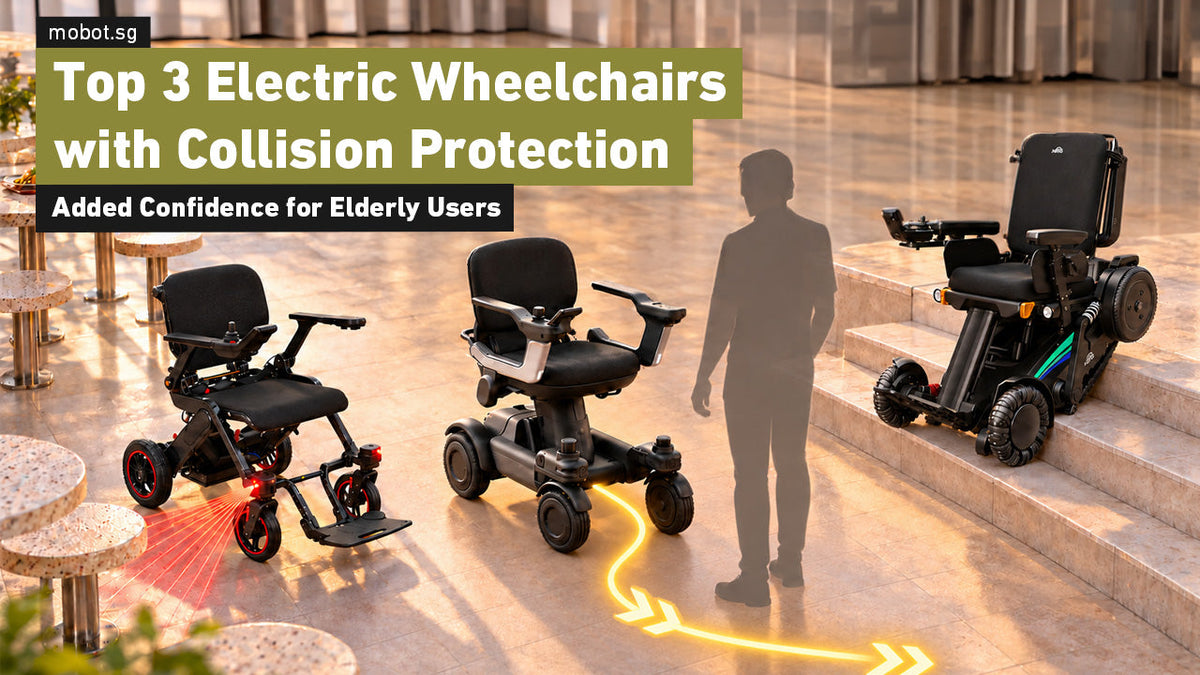
If these concerns sound familiar, consider MOBOT's Obstacle Sensing Electric Wheelchairs! These options are equipped with LiDAR sensors that either alert you when obstacles are detected or help steer away automatically, depending on the model and mode.
MOBOT's LiDAR Equipped E-Wheelchairs
| E-Wheelchair | Level of Safety Support | Other Smart Features |
|---|---|---|
 AI-DRIVE Carbon • $4999 |
Front LiDAR with EZ-Pass™ auto-swerve | Rear-view camera, smart app and fold-and-roll design. |
 STRUTT ev¹c • $8999 |
All-round sensing with braking and steering assistance in Co-Pilot modes. | Auto-Pilot navigation, touchscreen display and quad-motor drive. |
| Front and rear obstacle warnings. | Stair-climbing, self-balancing seat and app control. |

The key difference is what happens after an obstacle is detected: some systems assist the wheelchair’s movement, while others require you to respond to a warning.
LiDAR uses laser sensing to detect surrounding objects. Coverage and assistance depend on the model and driving mode.


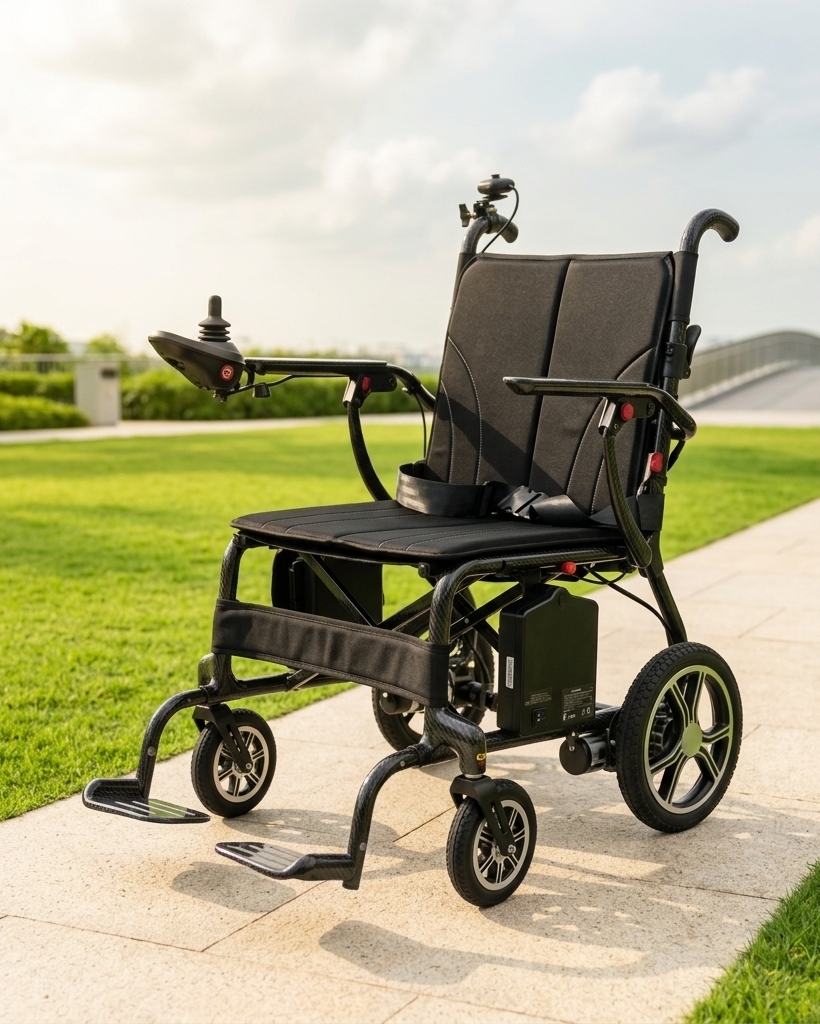
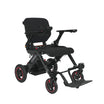
AI-DRIVE Carbon: Auto-Swerve Obstacles in Front, 15.9kg Portability • $4999
Do you worry about misjudging the space ahead or steering too close to furniture? If you want front obstacle assistance while keeping transport manageable, consider the AI-DRIVE Carbon.
Its dual front LiDAR sensors detect obstacles ahead. With EZ-Pass™ enabled, the wheelchair helps manoeuvre around detected obstacles, providing assistance with the small steering adjustments you might otherwise need to make yourself.
If reversing makes you nervous, the rear-view camera helps you check behind. You still control the movement, but you have an additional view to refer to before backing up.


And if you are the person folding and loading your parent’s wheelchair into a car, transport matters too. At approximately 15.9 kg without battery, its carbon-fibre design can stand and roll when folded.
Key features:
- Dual front LiDAR — detects obstacles in the forward sensing area.
- EZ-Pass™ auto-swerve — assists movement around detected front obstacles when enabled.
- Rear-view camera — helps you check behind when reversing.
- Fold-and-roll design — supports more manageable storage and transport.
Consider the AI-DRIVE Carbon if you want help around obstacles ahead and a chair that is easier to bring along. Its assistance is front-focused; the rear camera provides visibility rather than automatic avoidance. Front detection may be limited for objects above sensor height and reflective surfaces such as glass.
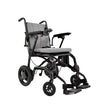
STRUTT ev¹c: All-Round Obstacle Avoidance, Award-Winning Autonomous Vehicle • $8999
If you are worried about hitting someone while steering, or feel unsure about your parent managing tight spaces, consider the STRUTT ev¹c. It combines all-round obstacle sensing with assistance that goes beyond warning you something is nearby.
Its LiDAR, cameras and other sensors monitor the surroundings. Co-Pilot Mode helps slow and brake when obstacles or risks are detected. If you find steering through narrow corridors or into lifts difficult, Co-Pilot+ adds steering assistance.
For you as a caregiver, these are features worth trying with your parent: observe how they manage the joystick and how the assistance responds as they approach obstacles. This gives you something practical to assess together, rather than relying on reassurance alone.
Separate Auto-Pilot functions—Pathfinder and Waypoints—automatically navigate to selected or saved destinations. Pathfinder lets you select a destination on the touchscreen map, while Waypoints provides navigation to saved locations.
Key features:
- 360° obstacle sensing — monitors the surroundings for potential hazards.
- Co-Pilot / Co-Pilot+ — braking assistance, with additional steering assistance in Co-Pilot+.
- Auto-Pilot: Pathfinder & Waypoints — automatically navigates to selected or saved destinations.
- Touchscreen with rear-view camera — helps you view your surroundings and check behind when reversing.
- Customisable controls — adjustable speed and joystick sensitivity to explore during your trial.
Consider the STRUTT ev¹c if your main concern is needing more active support while manoeuvring. Assistance depends on the selected mode, and you still need to remain attentive and ready to take control.
XSTO X12: Hazard Detection Alerts, Best Stair-Climbing Capabilities
If you or your parent also need to manage stairs, consider the XSTO X12. Alongside stair-climbing capability, it provides front and rear obstacle warnings to draw your attention to detected hazards.
The MOBOT XSTO X12 combines a wheel-and-track mobility system with a self-balancing seat. Its alerts add awareness when moving near objects ahead or reversing in confined spaces.
When an audible warning sounds, you need to stop, check your surroundings or change direction. The warning draws your attention to the hazard; it does not automatically steer around it.
If your concern is that your parent may not notice or react to a warning, check this carefully during a demonstration. Ask them whether they can hear the alert clearly and show you what they would do when it sounds.
Key features:
- Front and rear obstacle warnings — alert you to detected objects when moving forwards or reversing.
- Stair-climbing capability — helps address access routes where stairs are a daily challenge.
- Self-balancing seat — helps maintain a level seating position as the terrain changes.
Consider the XSTO X12 if stair access is a priority and you or your parent can respond reliably to obstacle alerts.
What Matters Most to You?
Start with the features you or your parent value most:
- “I’m worried about steering around people.” Consider the STRUTT ev¹c for all-round sensing, Co-Pilot braking and steering assistance, and Auto-Pilot navigatio.
- “I want help with obstacles ahead, but we also need to take the chair in a car.” Consider the AI-DRIVE Carbon for front obstacle assistance and lightweight portability.
- “We need stair access as well as warnings about nearby obstacles.” Consider the XSTO X12, while checking that the rider can respond to its alerts.
No sensing system detects every hazard or guarantees that a collision will not happen. These features support attentive driving; they do not replace practice or the ability to operate the wheelchair safely.
Not Sure Your Parent Can Manage? Try It Together.
You do not have to decide based on a feature list alone. If you are unsure whether your parent can manage an electric wheelchair, visit MOBOT together and explain what worries you—whether it is joystick control, turning near people or reacting to obstacles.
If you are choosing for yourself, tell the team which movements make you nervous. A guided demonstration lets you experience the controls and assistance before deciding.
During the trial:
- Practise starting and stopping to see whether the joystick feels manageable.
- Try turning and reversing to check how comfortably you judge space and control your movement.
- Test the obstacle features under staff guidance so you understand what the chair does and when you need to respond.
Visit MOBOT together to find out which level of assistance suits you or your parent—and build confidence through practice.

Leave a comment
This site is protected by hCaptcha and the hCaptcha Privacy Policy and Terms of Service apply.